


Parmigiano Reggiano is produced exclusively in the provinces of Parma, Reggio Emilia, Modena, Bologna on the left of the river Reno and Mantova on the right of the river Po.
 Security policies (change them with customer reassurance module)
 Shipping policies (change them with customer reassurance form)
 Policies for returns (change them with customer reassurance form)
Parmigiano Reggiano is produced exclusively in the provinces of Parma, Reggio Emilia, Modena, Bologna on the left of the river Reno and Mantova on the right of the river Po: Here the farms are concentrated in which the cows are fed with forages produced in this area.
The feeding of animals is treated in accordance with a regulation that prevents the use of silage forages, fermented foods and flours of animal origin. The morning milk and the previous evening are poured into the typical copper boilers in the shape of a reversed campaign.
For each form of Parmigiano Reggiano it takes about 550 liters of milk.
The coagulation of milk occurs slowly and naturally thanks to the addition of caglio and serum graft obtained from the processing of the previous day and rich in natural lactic ferments.
The curd is fragmented by the house master in tiny granules thanks to an ancient tool called spino.
It is at this point that the fire enters, for a cooking that reaches the 55 centigrade degrees, at the end of which the casey granules fall on the bottom of the boiler forming a single mass.
After about fifty minutes the housekeeper extracts the house mass that will give life to two twin forms.
Cut into two parts and wrapped in the typical linen, the cheese is put into a strip that will give it its definitive form.

Specific References
No customer reviews for the moment.

Its way of proposing extends its spectrum of use by going beyond the use at the table, to perform with great identity in aperitifs and appetizers.

The Montasio is an Italian cheese of protected origin, typical of north-east Italy, subject to strict production and seasoning procedures

Provolone del Monaco is a semi-hard cheese made of yarn, aged, produced in the area of the Sorrentine Peninsula, exclusively with raw cow milk Agerolese


The microclimate in the natural caves where these cheeses mature, in the high Alps, promotes the development of a unique flora on the external crust.

Homogeneous consistency with some small leaf, straw yellow


The smoked scamorza is a fresh cheese, especially for its compact and tender yarn paste, has a delicate taste and a mild aroma.

Gorgonzola is a very tasty cheese perfect also to taste in purity spread over bread.

Seasoning takes place in thousand-year-old caves of tuff and stone, where an optimal habitat is created for the seasoning of products that acquire inimitable organoleptic properties and a unique taste

The Stravecchio is an aged tome on fir-trees in traditional cellars.

The Caciocavallo Silano DOP is a semi-drum cheese made from whole cow's milk grown in the production area.

Semi-seasoned cheese produced with pasteurized sheep milk.

Caciocavallo podolico means that particular variety of caciocavallo produced exclusively with the milk of Podoliche cows, in the traditional way and only in certain periods of the year.

The composition of the raw material is equal to that of fresh cheeses, but lactic ferments are added.
 sale
sale
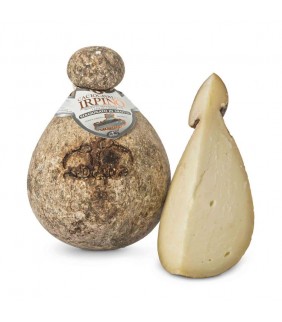
Seasoning takes place in thousand-year-old caves of tuff and stone, where an optimal habitat is created for the seasoning of products that acquire inimitable organoleptic properties and a unique taste


Pamigo is a traditional cheese belonging to the wide category of cheeses of the taste decided until spicy with the advancing of the seasoning.

Parmigiano Reggiano is produced exclusively in the provinces of Parma, Reggio Emilia, Modena, Bologna on the left of the river Reno and Mantova on the right of the river Po.